







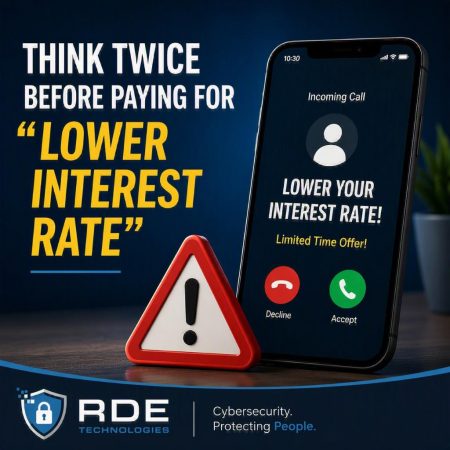
Receiving a phone call or email promising to slash your credit card interest rate can sound like an easy way to save money. Scammers know many people are looking for ways to reduce debt, and they take advantage of that by making promises they simply can’t keep.
Before you pay anyone to “negotiate” a lower interest rate, it’s important to understand how these scams work and how you can protect yourself.
Common Warning Signs
Fraudulent debt relief companies often use convincing sales tactics to pressure people into making quick decisions. Some of the most common red flags include:
- Claims of special relationships with banks or credit card companies. Scammers may insist they have exclusive partnerships that allow them to secure lower interest rates. They have no special access.
- High-pressure sales tactics. You may hear that the offer is only available “today” or that you must act immediately. This sense of urgency is designed to prevent you from taking the time to verify their claims.
- Promises of guaranteed savings. No legitimate company can guarantee that your credit card issuer will lower your interest rate. Some scammers even promise refunds if they fail, only to disappear after collecting your money.
- Upfront fees. If you’re asked to pay before any services are provided, that’s a major warning sign. Federal law prohibits companies that sell debt relief services over the phone from charging fees before they successfully reduce or settle your debt.
The truth is that most of what these companies claim they can do is something you can often do yourself by contacting your credit card issuer directly.
How to Protect Yourself
Avoid becoming a victim by following these simple best practices:
- Contact your credit card company yourself. If you’re struggling with high interest rates, call the customer service number on the back of your card. Many issuers are willing to discuss hardship programs or rate reductions directly.
- Never share sensitive information with unexpected callers. Don’t provide your credit card number, banking information, Social Security number, or other personal details to anyone who contacts you without your request.
- Don’t pay before services are completed. Legitimate debt relief companies cannot legally charge upfront fees for services they haven’t delivered.
- Ignore robocalls offering financial services. Automated calls promoting debt relief or interest rate reductions are often illegal and frequently part of a scam. Hanging up is the safest response.
If You’ve Already Sent Money
If you believe you’ve paid a fraudulent company, act as quickly as possible. Contact your bank or credit card provider to report the transaction and ask whether the payment can be disputed or stopped. The sooner you report fraud, the better your chances of limiting financial losses.
You should also monitor your financial accounts for unauthorized activity and consider changing passwords if you shared sensitive information.
Report the Scam
Reporting scams helps protect others from becoming victims. If you’ve received a suspicious call or message offering to lower your credit card interest rate, report it to the Federal Trade Commission (FTC). If it was simply an unwanted sales call, you can also report it through the National Do Not Call Registry.
Stay Alert
Scammers continue to find new ways to exploit financial concerns, but knowing the warning signs can help you avoid becoming a victim. If an offer sounds too good to be true or requires immediate payment, take a step back, do your research, and contact your financial institution directly before making any decisions.
At RDE Technologies, we believe cybersecurity isn’t just about protecting devices, it’s about protecting people. Staying informed is one of the best defenses against today’s evolving scams.