






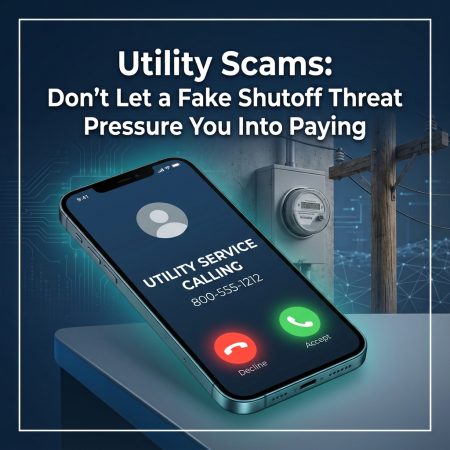
Imagine receiving a phone call saying your electricity, water, or gas is about to be disconnected. The person on the other end claims to represent your utility company and insists that you need to make a payment immediately to keep your service running.
It sounds urgent, but that urgency is exactly what the scammer wants.
Utility scams are designed to frighten people into making quick payments before they have a chance to stop and verify the situation. Scammers may impersonate electric, gas, or water providers and contact you by phone, text message, email, or even show up at your home.
How Utility Scammers Operate
The scam usually begins with a threat. You may be told that your account is past due and that your service will be disconnected unless you pay immediately. The scammer may even provide a specific deadline to make the situation seem more legitimate.
The goal is to keep you from taking time to check whether the claim is real.
A scammer may then direct you to make a payment using a method that is difficult to reverse or recover. This can include:
Gift cards
Cryptocurrency
Wire transfers
Payment apps
Other unusual payment methods
You may also receive a text or email containing a link that supposedly takes you to your utility company’s payment website. Clicking the link could instead lead you to a fraudulent website designed to collect your payment information or personal details.
Don’t Let a Threat Rush You
If someone contacts you and says your utility service will be disconnected unless you pay immediately, don’t panic. Take a moment to verify the claim.
Do not use the phone number provided by the caller or reply to a suspicious text or email. Instead, contact your utility company directly using the phone number printed on a previous bill or by visiting its official website.
If someone comes to your home claiming to be a utility employee, you don’t have to let them inside. If you’re unsure whether they are legitimate, contact the utility company yourself to confirm that the visit is genuine.
Be Careful When Searching for Your Utility Company Online
Even finding the correct utility company’s website can require some caution.
When you search for a company online, the first results may include paid advertisements. Scammers and dishonest businesses can use advertisements or misleading websites to make themselves appear connected to legitimate companies.
Before entering account or payment information, make sure you are on the actual utility company’s website. If you’re unsure, use a website address you have previously saved or use information from a paper bill to contact the company.
Don’t assume that the first search result is automatically the official one.
Know the Payment Red Flags
One of the biggest warning signs is being told that you must pay using a particular unusual method.
If someone insists that you purchase gift cards and provide the card numbers, send cryptocurrency, wire money, or transfer funds through a payment app to prevent your utilities from being shut off, stop and verify the situation.
These payment methods can make it much more difficult to recover your money after you’ve been scammed.
A legitimate billing problem can be handled by contacting your utility company directly. You should never feel pressured to send money to an unexpected caller simply because they threaten you with immediate consequences.
What If You Already Paid?
If you realize that you have paid a utility scammer, act quickly. Depending on how you sent the money, you may be able to contact the payment provider and ask whether the transaction can be reversed or stopped.
You should also change any passwords or account information you provided to the scammer and monitor your financial accounts for suspicious activity.
If you gave a scammer sensitive personal information, take additional steps to protect your accounts and identity.
When in Doubt, Verify
Utility scams work because they create a sense of urgency. The scammer wants you thinking about what might happen if your power or water is disconnected instead of stopping to question whether the person contacting you is legitimate.
Remember these simple steps:
Stop. Don’t panic. Verify.
Don’t click unexpected links, don’t provide personal or financial information to an unsolicited contact, and don’t make a rushed payment because someone threatens you with immediate service termination.
If you encounter a suspected utility scam, report it to your utility company and the appropriate authorities. Reporting scams can help warn others and may help investigators identify patterns of fraudulent activity.
When it comes to unexpected payment demands, taking a few extra minutes to verify the situation could save you much more than money. It could also keep your personal and financial information out of the hands of a scammer.