





Who doesn’t love the idea of winning a prize? An email from a trusted brand offering a free iPhone, vacation, or gift card can be hard to ignore, especially if you’ve recently shopped with that company.
Scammers know this, and they’re using fake surveys to lure unsuspecting victims into handing over personal and financial information.
How the Scam Works
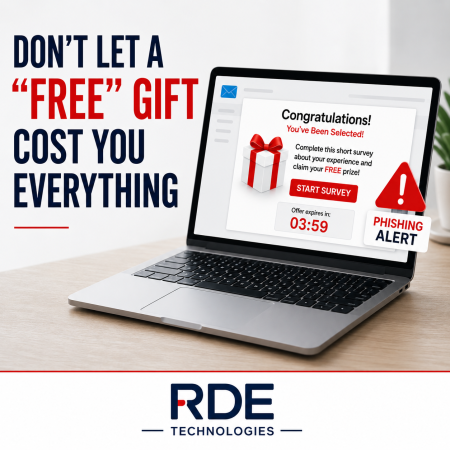
You receive an email claiming to be from a familiar company like Costco, Marriott, or another well-known brand. The message thanks you for being a valued customer and invites you to complete a short survey for a chance to claim an exclusive reward.
To make the offer seem more convincing, the email may include a countdown timer or warning that the deal expires soon. The goal is to create urgency, so you don’t stop to question whether the offer is legitimate.
After answering a few simple questions, you’re told you’ve won a brand-new iPhone or another expensive prize. There is just one catch. You need to pay a small shipping or processing fee by entering your credit card details and personal information.
Unfortunately, there is no prize.
The survey is fake, and the scammers are simply collecting your payment information and personal data, which can be used for fraud or identity theft.
How to Protect Yourself
Be skeptical of unexpected prizes.
If you were not expecting a reward or did not enter a contest, think twice before claiming a “free” gift.
Watch for hidden fees.
A legitimate giveaway should not require you to pay a shipping or processing charge to receive your prize.
Do not let urgency influence your decision.
Countdown timers and limited-time offers are common tactics designed to pressure you into acting without thinking.
Verify offers independently.
Instead of clicking links in suspicious emails, visit the company’s official website or contact them directly to confirm whether the promotion is real.
Cybercriminals are constantly finding new ways to exploit trusted brands and tempting offers. The best defense is to slow down, question unexpected messages, and never provide personal or financial information unless you have verified the source.
Remember: If a “free” prize requires you to pay for it, it is probably not free at all.
Stay alert and stay secure with RDE Technologies.