





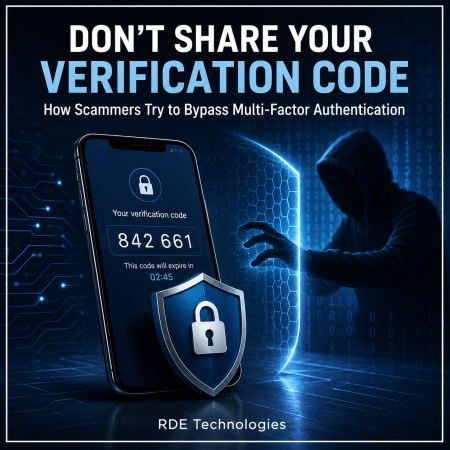
Many online accounts use multi-factor authentication (MFA) to help protect your personal information. Whether you’re logging into your bank account, email, or another online service, you may be asked to enter a verification code that is sent to your phone or email.
This extra step is one of the best ways to keep cybercriminals out of your accounts. Unfortunately, scammers know this too, and they’re finding increasingly convincing ways to trick people into handing over these codes.
Why Verification Codes Matter
Think of your password as the lock on your front door and your verification code as the deadbolt. Even if someone manages to get your password, they still shouldn’t be able to access your account without that second layer of protection.
The problem is that scammers don’t always try to break through your security. Instead, they try to convince you to unlock the door for them.
How the Scam Works
A scammer may contact you by phone, text message, or email claiming there’s suspicious activity on one of your accounts. They might pretend to be from your bank, a well-known retailer, a government agency, or even a technical support team.
In many cases, they’ll already know some basic information about you, making the conversation seem legitimate. They’ll often create a sense of urgency by saying your account has been compromised or that someone is trying to access it.
While you’re distracted by the situation, they’ll tell you that a verification code has been sent to your phone and ask you to read it back “to confirm your identity.”
What they don’t tell you is that they are actually trying to log into your account. By giving them that code, you’re unknowingly approving their login attempt.
Remember: Verification Codes Are for You Only
A legitimate company will never ask you to share a one-time verification code over the phone, by text, or by email.
If someone asks for a code that was just sent to your device, treat it as a red flag. Even if the caller sounds professional or claims to be helping you, do not provide the code.
What To Do Instead
If you receive an unexpected request for a verification code:
- Never share the code with anyone.
- End the conversation immediately if someone asks for it.
- Contact the organization directly using a trusted phone number or their official website.
- If you believe your account may have been compromised, change your password immediately and review your recent account activity.
- Enable multi-factor authentication on your important accounts if you haven’t already.
Stay One Step Ahead
Cybercriminals are becoming more sophisticated, but their tactics often rely on convincing people to act quickly without thinking. Remember that verification codes are designed to protect your account, not to be shared with anyone else.
When in doubt, stop, verify the request through official channels, and never trust unsolicited calls, emails, or text messages asking for sensitive information. A few extra moments of caution can prevent a costly security breach.